Water is the enemy of flatwork
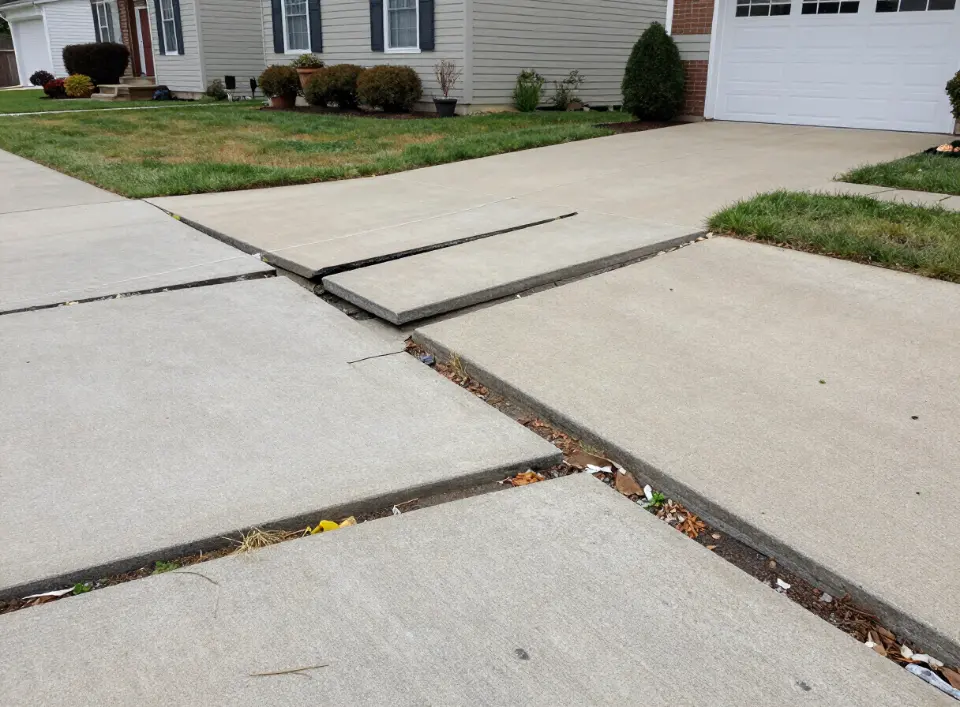
When water sits on or under a slab, it does damage in three ways: it saturates the concrete and freezes, it washes out the sub-base, and it runs toward foundations and garages. Every one of these shortens the life of the concrete.
Good drainage moves water away from the slab, off the surface, and out from under the base. It is the part of the job nobody sees, and it is the part that decides whether the slab looks good in year eight.
Surface slope
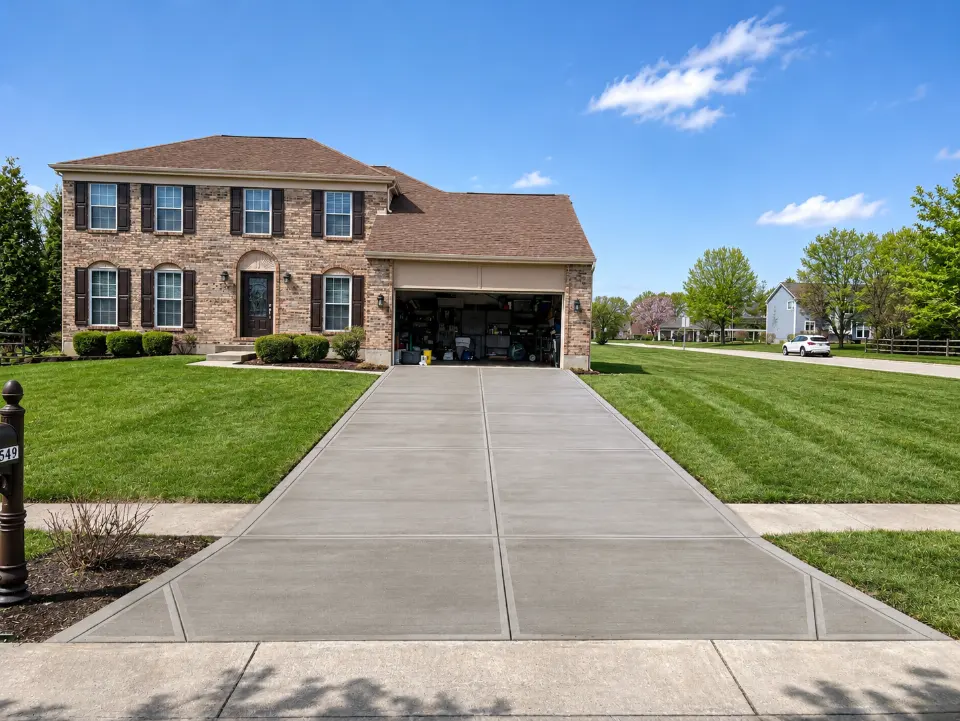
A driveway, patio, or walk needs positive slope so water sheds to a planned outlet. For a driveway that means away from the garage. For a patio that means away from the house and the seating area. Too flat and water puddles; too steep and the surface feels wrong underfoot.
We set the finish elevation to the size of the slab and the surrounding grade, and we check it with a string line and a level, not by eye.
Sub-base drainage
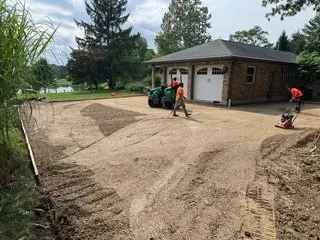
Under the concrete, a compacted stone base lets water move rather than pool. If the base is weak, wet, or uncompacted, it settles and the slab above it cracks and drops. We compact the base and grade it so water does not sit beneath the slab.
In areas with heavy clay or poor drainage, we may build in a drainage path or recommend a more robust base. We tell you what your soil needs at the walk-through.
Directing water away from the house
A slab that slopes toward the foundation sends meltwater and rain where you do not want it. During replacement we re-grade so water moves away from the home. For patios and walks near the house, the finish elevation is set with the foundation in mind.
Common questions
Why does my concrete crack and settle?
Most cracking and settling traces back to water. Water that sits on or under a slab saturates the concrete, washes out the sub-base, and freezes. Good surface slope and a compacted, well-drained base are the best protection.
How much should a driveway slope for drainage?
Enough to shed water to a planned outlet without feeling steep. We set the slope to the size of the slab and the surrounding grade and check it with a level, not by eye. The goal is water moving away from the garage and foundation.
What happens if water runs toward my foundation?
It can cause settling, basement moisture, and foundation problems. During replacement we re-grade so water moves away from the home. For new patios and walks near the house, the finish elevation is set with the foundation in mind.
Does a concrete patio need drainage?
Yes. A patio needs positive slope so water sheds to a planned outlet. Too flat and it puddles where you sit. If the yard slopes toward the home, we plan a drainage path so the patio does not collect water.