How freeze-thaw damages concrete
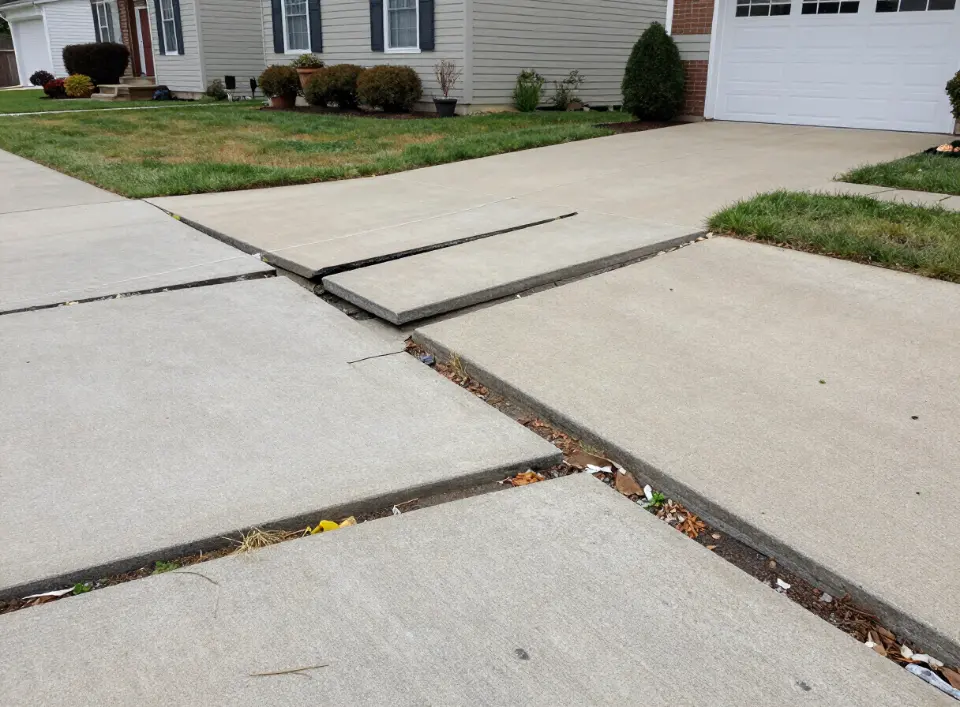
Concrete is porous. When moisture saturates the surface and the temperature drops below freezing, the water inside expands as it turns to ice. That expansion stresses the paste, and over repeated cycles the surface scales, spalls, and eventually breaks down.
Air entrainment solves this by creating microscopic bubbles in the mix that give freezing water room to expand without stressing the paste. We use air-entrained mix on all exterior flatwork in Loveland for exactly this reason.
The role of salt and de-icers
De-icing salt lowers the freezing point of water, which increases the number of freeze-thaw cycles the surface goes through in a single winter. It also draws moisture into the concrete, amplifying the damage. The combination of salt and freeze-thaw is what scales driveways and walks.
A sealer slows salt and water uptake. For new concrete, we also recommend avoiding heavy de-icer use in the first winter while the surface is still gaining strength.
Drainage is freeze-thaw protection
Water that sits on or under a slab is water that freezes there. Positive surface slope and a well-drained base keep moisture from pooling, which reduces the freeze-thaw stress on the concrete. Drainage and air entrainment work together.
Seasonal care
Seal new concrete and reseal on the schedule we provide. In winter, use de-icers sparingly and avoid metal shovels that gouge the surface. Rinse salt off in spring. Keep joints routed and sealed so water does not enter and freeze in the base. These small habits add years to flatwork.
Common questions
Why is my concrete scaling in Ohio winters?
Scaling is usually caused by freeze-thaw cycling combined with salt and moisture. Water saturates the surface, freezes, and breaks down the paste. Air-entrained mix, a sealer, and sparing de-icer use are the best protection.
What is air-entrained concrete and why does it matter in Ohio?
Air entrainment adds microscopic bubbles to the mix that give freezing water room to expand without stressing the paste. It is the single most important mix feature for exterior concrete in a freeze-thaw climate like Ohio.
Is de-icing salt bad for concrete?
Salt increases the number of freeze-thaw cycles the surface goes through and draws moisture into the concrete, which accelerates scaling. Use it sparingly, especially on concrete less than a year old, and rinse salt off in spring.
How do I protect my concrete in winter?
Seal it, reseal on schedule, use de-icers sparingly, avoid metal shovels, and keep joints sealed so water does not enter and freeze in the base. These habits add years to flatwork in Ohio.